Our Bodies Hold So Much…
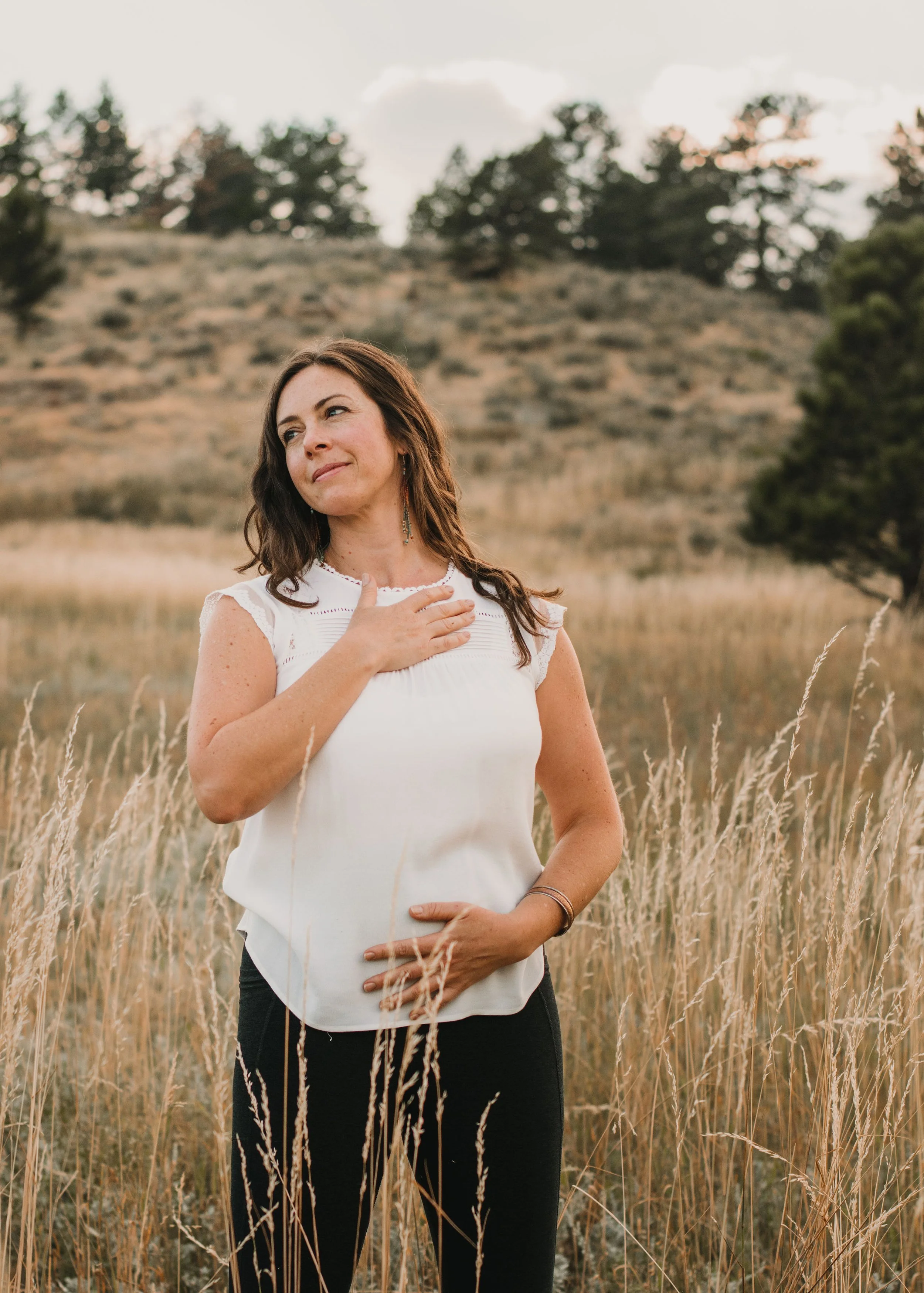
I've had some intense heath challenges over the past months and it's gotten me thinking. I certainly promote embodiment, and I do believe that living in loving relationship with one's body has so much value. I believe that practicing awareness of our physical bodies gives us valuable information - it tells us how we feel emotionally ("Feelings are called feelings because we feel them" - paraphrased from Brene Brown), it helps us guide our movement, and it builds trust and respect within ourselves.
However, when we're in pain, or have experienced trauma in our bodies, our bodies are the last places we'd like to be. It feels horrible to be a human sometimes, and sometimes it's a beautiful and safe thing to exit our bodies. Often this happens without conscious choice, which is a genius strategy of the body. It will check us out if we are overwhelmed by the situation we're in. And then, hopefully, we can return to our bodies after the event, trauma or illness.
What do I mean by “Checking out" or "Exiting our bodies?” I mean existing in your thinking mind rather than in your physical body. We ignore or shut off the information that our bodies are giving us, because sometimes it's intolerable. This is a survival skill, and one to be grateful for. However, if we train the skill of detaching or disembodying too often, it can be a real challenge to re-engage and return to the body and all of its feelings and sensations. I've found in my practice of teaching movement for 17 years that people are often unaware of the moments they leave their bodies, and that the habit of existing with decreased or severely limited body awareness carries on through life, well after the event(s) that caused our disembodiment. It's real and valid to feel disconnected from your body.
Returning to your body means awakening your body awareness, and being open and curious about feeling all of the sensations that this entails. If you've experienced trauma, it's important to take this really slowly and find the help of a counselor or therapist, since it can be overwhelming and re-traumatizing to do too much too fast. We want to take this process in small steps, learning to regulate our nervous systems bit by bit.
Returning to our bodies is important work, and should be done with plenty of support, some of which might look like embodied movement sessions. This process gives you a variety of tools, strategies, reframes and new reference points for re-engaging with your body. I use anatomy as an entry point because it awakens curiosity and reverence for our amazing bodies and gives us a completely new lens through which to see, feel and interpret our bodies. We can practice returning to our bodies one small exercise at a time, slowly building confidence that we can return and still be safe. We always approach with compassion and kindness, since no sustainable change ever comes from being unkind to ourselves.
As I explore how to heal from my own health challenges, my sense of compassion has been renewed. I feel so deeply for my sweet body as she tries her best to get me through this life. And I'm committed to aligning with her again and again, navigating my own dynamic relationship with my body as gracefully as I can. Our stories are not linear; they are complex and layered, and I want you to know that I have time for your story. I have time to listen and adapt, and to always be creative with you about finding the best path for you to re-engage with your own body at your own pace. I am full of compassion for all of our experiences here and I know what a big deal they are. I understand how hard it is to be inside a body sometimes, but I also am lucky enough to know the pleasure and power that is available to us as we practice living embodied.
Our bodies hold so much, and I am here for all of it.